
ABOUT MIGRANT WORKER HEALTH CARE
What are the main health risks among migrant workers?
Main health risks include: Occupational exposures/hazards e.g. poor ventilation systems in greenhouses, heavy lifting, repetitive and awkward postures, agrochemicals, unsafe farm equipment, soil, insects, plants, weather extremes, and confined spaces, unsafe transportation (e.g. farm vehicles, bicycles) some have poor living and housing conditions stressful separations from families, cultural dislocation and a lack of social support in Canada.
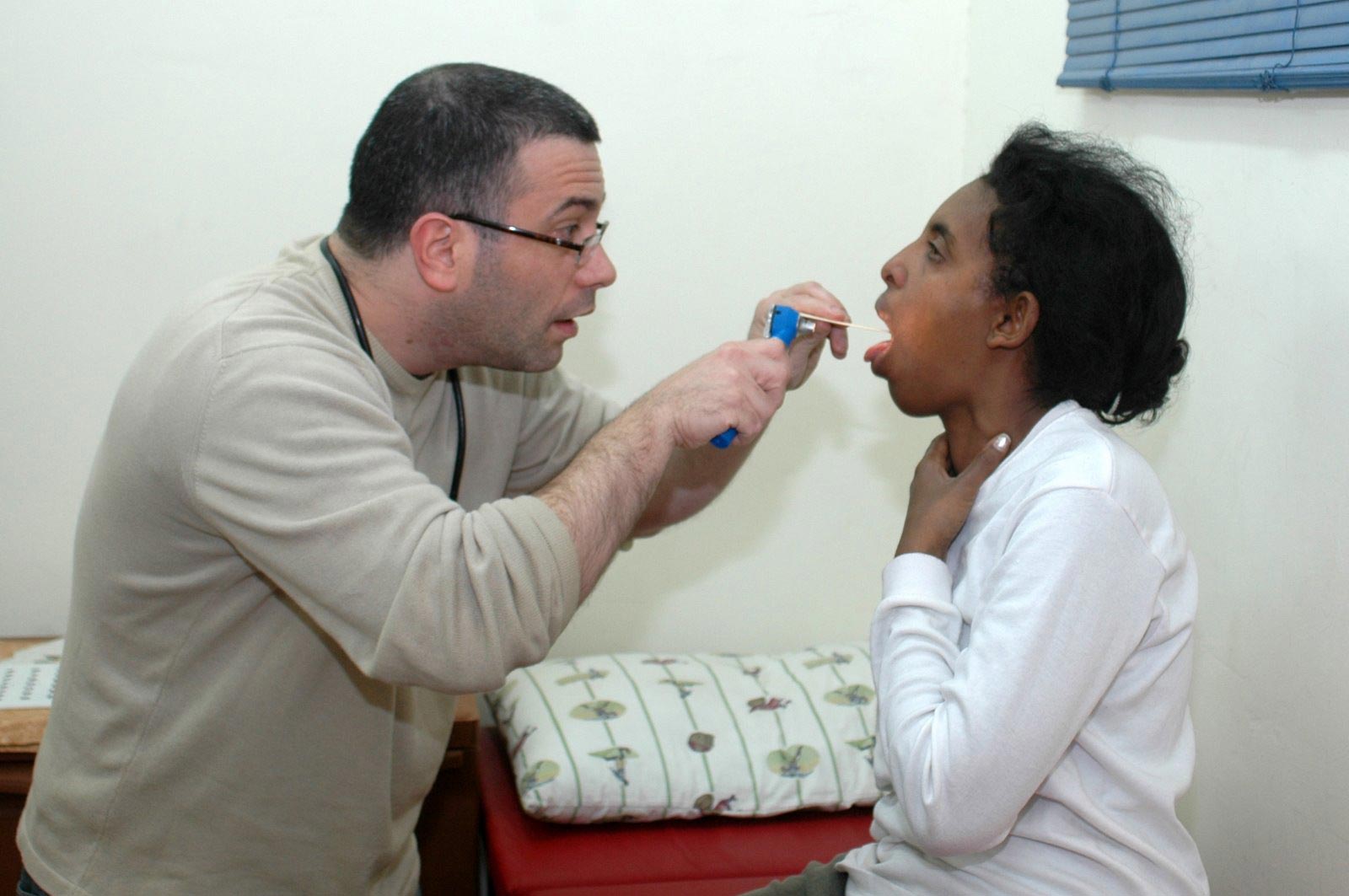
Photo: Physicians for Human Rights (CC BY NC SA 3.0)
FREQUENTLY ASKED QUESTIONS
What are the Barriers to Healthcare Access and Considerations for Overcoming Them?
Vulnerability and Confidentiality
For much of their time in Canada migrant workers are dependent on their employers to help them navigate the healthcare system. However, these same individuals may try to persuade workers or healthcare providers not to file WSIB claims or EI sickness benefits, and can fire and thereby cause a worker to be repatriated for any sufficient reason (including illness and injuries). Workers may also be concerned about revealing health issues to their employers for fear that it could compromise current or future work opportunities. It is especially important that services are made available which consider these vulnerabilities and that allow migrant workers a safe, confidential space for service provision. Accordingly, healthcare providers should not allow employers to be present as translators or intermediaries unless a worker explicitly requests that they fill this role.
Awareness / Advertising
There are distinctive challenges to informing workers about services. Many migrants are outside the reach of such typical methods of communication and promotions as local media or independent mailings. To be effective, promotional efforts should target the areas which workers frequent or partner with organizations with well established channels of accessible communication for the workers. If providers hold special clinics for migrant workers, these should be advertised through existing migrant worker support groups or specialized outreach efforts.
Language and Literacy
Many migrant workers do not speak English and those who do often have limited literacy. It is essential that all services provided to migrant workers be offered in the language that workers understand using basic messaging that does not necessitate advanced literacy. Providers should consider utilizing professional translation services, language guides, or community support groups to facilitate communication.
Hours / Timing
Migrant workers often work long hours, sometimes six or seven days a week. It is important to determine in advance the limited hours which migrant workers have available, and offer services to them within these timeframes. This may involve service provision on evenings and/or weekends. Typically Friday evenings and Sunday afternoons are ideal times for migrant workers.
Affordability / Cost
Generally the migrant workers' primary motivation to work in Canada is to earn money needed to support their families; therefore services which necessitate a cost may be prohibitive. Wherever possible, services should be offered free of charge.
Location / Transportation
Most migrant workers are employed in rural areas and have limited transportation options. It is essential to find a location that is accessible to them (i.e. within biking distance) and/or to provide free or low-cost transportation options.
Links / Collaboration
Forming collaborative partnerships with migrant support groups is a useful way to bridge the gaps that otherwise exist between service providers and migrant workers. Such groups can often assist with services such as translation, outreach, promotions and transportation.
Adaptability / Flexibility
Migrant workers have very little control over their work schedules, and sometimes their schedules change without notice. Furthermore, many workers do not have regular access to a telephone. They can also be transferred or repatriated to their home country at any time, sometimes with only a day's notice. It is therefore essential to have back-up plans for follow-up communication and to be adaptable to workers' varying needs, schedules and circumstances. It is important, for example, to ask workers if they have a cell phone or a friend/advocate with a phone, as well as their contact information in their countries of origin.